 LinkClerk
23 February 2026
LinkClerk
23 February 2026
We’re all acutely aware that backlinks are one of the strongest signals search engines use to understand the authority and relevance of a website. They help search engines decide which pages deserve to rank and which ones should sit quietly in the background (oh, how lonely!). However, backlinks are not permanent. They fade, disappear or lose value over time. This slow erosion is known as backlink decay or link rot; and it is one of the most overlooked causes of ranking drops.
Most proactive website owners focus on building new links, but sadly very few pay attention to the links they have already earned. When those links decay, the authority you once had begins to slip away. Noooo!
The good news is that backlink decay can be measured, monitored and reversed with the right approach. In this article, I explain how it works, why it matters and what you can do (starting right now!) to protect your hard-earned link equity.
Table of Contents
Understanding Backlink Decay
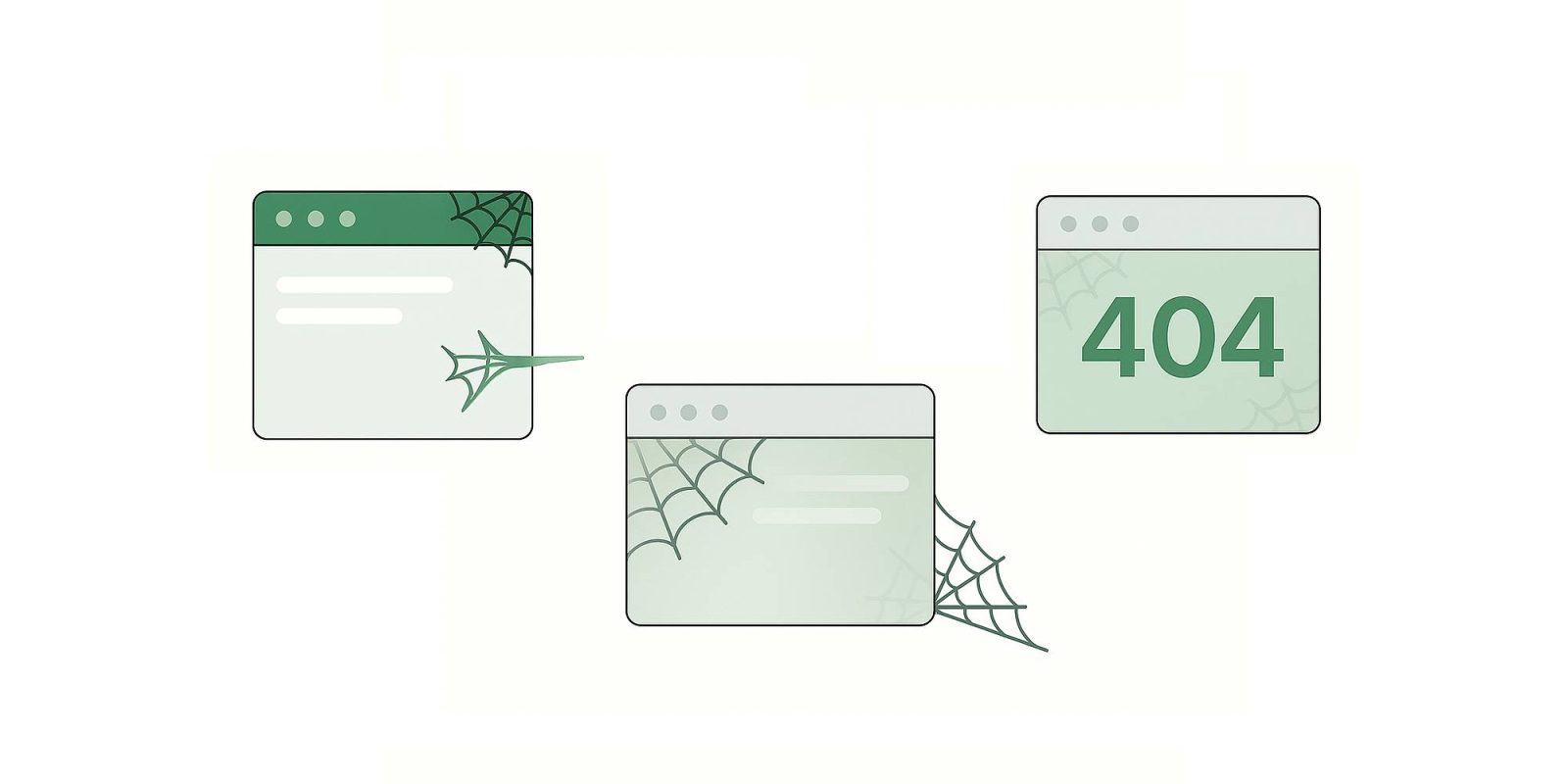
So, what is backlink decay? Well, it refers to the gradual loss of link value over time. It is different from link rot, which is when a link stops working entirely. It is also different from backlink loss, which is when a link is removed from a page. Backlink decay is more subtle. The link still exists, but it no longer passes the same level of authority.
This can happen for many reasons. The linking page might lose its own authority. The content may become outdated. The page might be buried deeper in the site structure. The link might be surrounded by new content that changes its context. Search engines may simply decide the link is no longer as relevant as it once was.
Backlink decay is a natural part of the web. Studies suggest that eight to fifteen per cent of backlinks lose value each year. The challenge is not to stop decay entirely, but to understand it and manage it.

Why Backlink Decay Happens
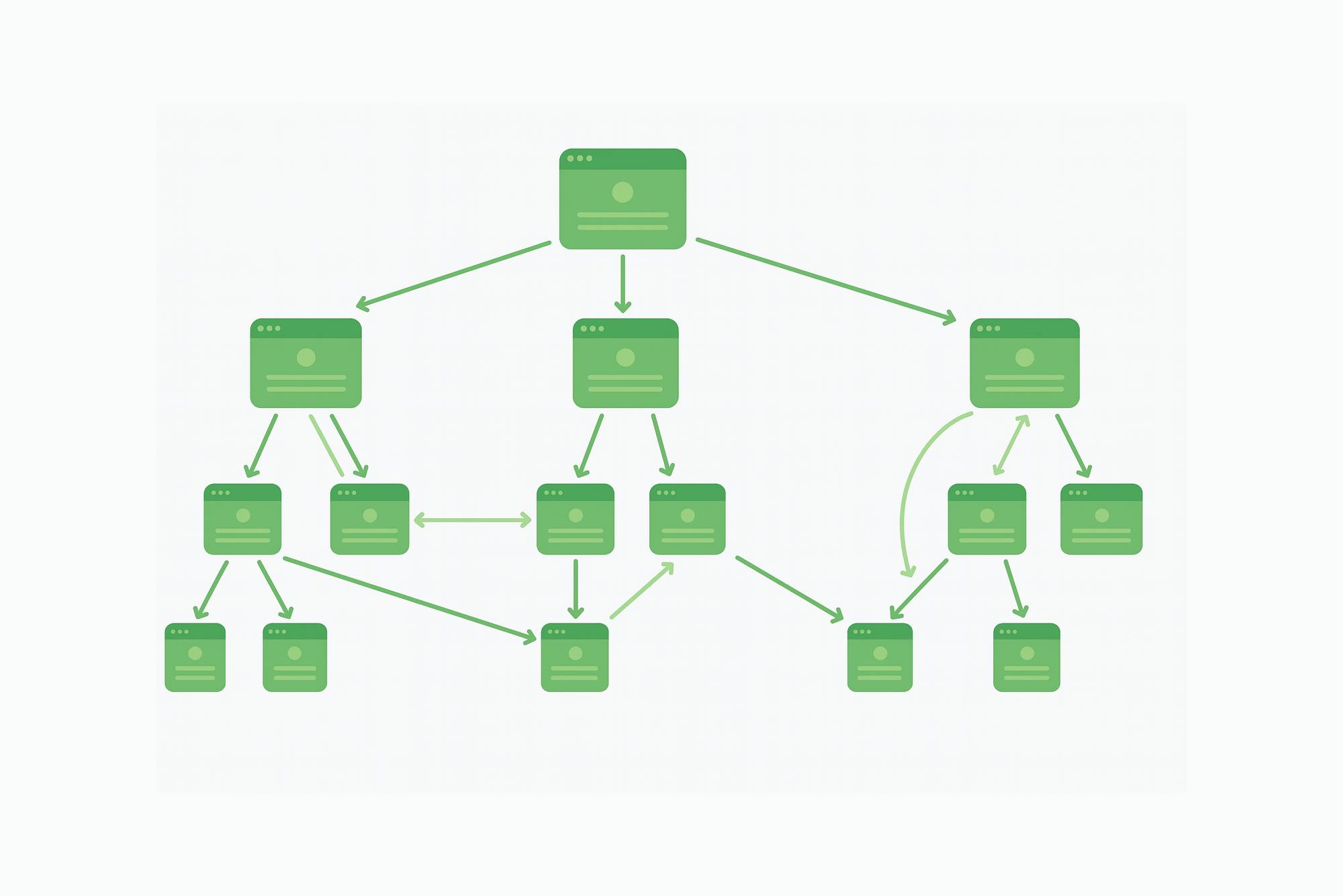
Backlink decay is not random. It follows predictable patterns driven by how the web evolves, how publishers update content, and how search engines reassess relevance and authority over time. Understanding these forces will help you understand and diagnose ranking drops and build a link profile that stays strong for years rather than months.
Content Removal, Restructuring and URL Changes
This is the most common cause of backlink decay. Websites constantly update their structure, and backlinks often get caught in the crossfire.
Typical scenarios
- A blog post is deleted during a content cleanup
- A site migrates to a new CMS and URLs change
- A category is renamed and old URLs are not redirected
- A page is merged into a new “ultimate guide”
Even when redirects are in place, link equity does not transfer perfectly. Redirect chains, 302s instead of 301s, or redirects to less relevant pages all reduce the value passed through the link.
Why it matters
Search engines treat URL stability as a trust signal. When URLs change frequently, the authority flowing through backlinks becomes diluted.
Declining Relevance of the Linking Page
Relevance is not static. Just like a chart topping song, a page that was highly relevant when it first linked to you, may slowly drift away from your topic over time.
Examples
- A tech blog shifts from software reviews to AI commentary
- A health site updates an article and removes the section that referenced your topic
- A news article becomes outdated and loses topical freshness
Search engines constantly reassess context. If the linking page no longer aligns with your subject matter, the backlink’s weight drops.
Why it matters
Backlinks are not just votes; they are contextual signals. When the context weakens, the signal weakens.
Loss of Authority on the Linking Page
Backlinks decay when the linking page itself loses strength. This is the “second‑order decay” most SEOs overlook.
How it happens
- The linking page loses its own backlinks
- The domain’s overall authority declines
- The page stops receiving internal links
- The page becomes buried deep in the site architecture
When the linking page loses authority, the value it can pass to you naturally decreases.
Why it matters
Authority flows through the web like electricity. If the source weakens, the current weakens.
Effortless backlink management
Audit, organise, and upgrade your links in minutes; not hours. We manage and monitor every backlink to improve your SEO and stay up to date.
Editorial Changes and Content Refreshes
Writers and editors update content constantly. During these updates, your link may be:
- moved lower on the page
- surrounded by new content that changes its context
- replaced with a more recent or more authoritative source
- removed entirely without malicious intent
Even if the link remains, its position and context influence how much value it passes.
Why it matters
Search engines evaluate link placement, anchor text and surrounding content. A link that moves from a key paragraph to a footnote loses weight.
Technical Issues and Site Migrations
Technical decay is one of the most silent killers of link equity. This is usually the stuff that happens “under the hood” on a website.
Common issues
- Redirect chains created during migrations
- Incorrect canonical tags
- Pages accidentally noindexed
- Server downtime causing temporary 404s
- JavaScript rendering issues hiding links
These issues often go unnoticed for months, quietly eroding link value.
Why it matters
Well, search engines need clean, crawlable, stable pages to pass link equity reliably. If the website starts having technical issues, then Google and other search engines start backing away from it, over time.
Domain Expiration or Ownership Changes
When a domain expires or changes ownership, backlinks pointing to it lose value instantly.
Scenarios
- A small blog shuts down
- A business closes and lets its domain lapse
- A domain is purchased and repurposed for unrelated content
Even if the link still technically exists, the trust signal disappears.
Why it matters
Search engines treat expired or repurposed domains as new entities. Their historical authority resets.
Algorithmic Reassessment by Search Engines
Backlink value is not fixed. Search engines continually refine how they interpret links.
What triggers reassessment
- Spam updates
- Link quality updates
- Relevance and helpfulness updates
- Changes in how anchor text is weighted
A link that once passed strong authority may be downgraded if the algorithm decides the linking page is low quality, thin, or off‑topic.
Why it matters
Backlink decay is not always caused by the linking site. Sometimes it’s caused by Google changing the rules.
Natural Content Ageing and Link Freshness
Some backlinks simply lose value because the content becomes old. For example, an article about the initial spread of COVID, or a guide to who to watch at the 2020 Olympic Games.
Examples
- A 2018 article linking to you is now buried under hundreds of newer posts
- A page stops receiving traffic or engagement
- The linking site stops updating entirely
Search engines favour fresh, active content. When a page stagnates, its ability to pass authority fades.
Why it matters
Link freshness is a real ranking factor, especially in fast‑moving industries.
Increased Competition for Link Equity
Even if your backlink remains intact, its relative value can drop when:
- the linking page adds dozens of new outbound links
- competitors earn stronger links from the same domain
- the linking page’s internal link structure changes
Link equity is finite. When more links compete for the same authority, each one gets a smaller share.
Why it matters
Backlink decay is sometimes caused by dilution, not loss.
Anchor Text Drift
Anchor text influences how search engines interpret a link. Over time, anchor text relevance can weaken.
How it happens
- The linking page updates the sentence around your link
- The anchor text becomes less aligned with your target topic
- The page adds new links with stronger anchors to competing content
Why it matters
Anchor text is a relevance signal. When it drifts, the link’s topical strength decays.
How Backlink Decay Affects SEO
Backlink decay has a compounding effect. A single decayed link may not cause a noticeable drop, but dozens or hundreds of them can significantly weaken your authority. The impact usually shows up in the following ways.
Loss of link equity
When backlinks lose strength, the authority they once passed to your pages fades. This reduces your ability to compete for competitive keywords.
Reduced crawl efficiency
Search engines rely on strong backlinks to discover and prioritise content. When those links decay, your pages may be crawled less frequently.
Declining topical authority
If your strongest backlinks weaken, search engines may question your relevance in your niche. This can affect rankings across an entire topic cluster.
Traffic erosion
Backlink decay often leads to slow, steady ranking drops. These drops accumulate over time and eventually show up as noticeable traffic loss.
How To Measure Backlink Decay
Most websites lose link equity long before anyone notices. Backlink decay is subtle, and unless you measure it deliberately, it hides inside your analytics as slow, unexplained ranking drops.
The goal is not just to count lost links, but to understand how much authority you are losing, where it is leaking from and which pages are most affected. Measuring backlink decay properly gives you a clear picture of your site’s health and helps you prioritise recovery efforts that actually move the needle.
Start With a Complete Backlink Export
The first step is to gather a full snapshot of your backlink profile. Tools such as Ahrefs, Semrush and Majestic allow you to export all known backlinks, including the linking URL, anchor text, link type, authority metrics and the date the link was first seen.
A complete export gives you a baseline. It shows you the total number of backlinks, the distribution of authority across your pages and the links that matter most. This baseline becomes the reference point for tracking decay over time.
Identify Links That Have Lost Strength
Backlink decay is not always about links disappearing. Many links remain in place but lose value quietly. To detect this, compare your current backlink data with older exports or historical tool data.
Look for links that have shifted from dofollow to nofollow. Check for pages that have dropped significantly in URL Rating, Page Authority or Trust Flow. Identify links that still exist but now sit on pages with lower traffic, fewer internal links or reduced relevance. These are decayed backlinks even though they are technically still present.
This step reveals the hidden decay that most site owners miss.
Detect Lost Backlinks and Broken Link Paths
Some backlinks decay because the linking page no longer exists or the link no longer points to a valid URL. These are the easiest to spot and often the easiest to recover.
Tools can show you:
- links pointing to 404 pages
- links pointing to redirected URLs
- links pointing to pages that no longer contain your link
- links pointing to pages that have been repurposed
Broken link paths are especially important. A link that once pointed directly to a valuable page may now pass through multiple redirects or land on a less relevant page. Each hop reduces authority.
Assess the Impact on Key Pages
Not all backlinks matter equally. A decayed link pointing to a low‑value blog post is not the same as a decayed link pointing to a high‑converting landing page.
Group your backlinks by target URL and identify which pages have lost the most authority. This helps you understand where decay is hurting your rankings and where recovery efforts will have the biggest impact.
Pages that rely heavily on external authority, such as competitive landing pages or cornerstone content, should be monitored closely.
Calculate Your Backlink Decay Rate
Once you have identified lost and weakened backlinks, you can calculate your decay rate. This is a simple but powerful metric that tells you how quickly your link equity is eroding.
Compare the number of strong backlinks you had twelve months ago with the number you have today. You can refine this by focusing only on high‑authority links or links pointing to key pages.
A typical decay rate sits between eight and fifteen per cent per year, but this varies by industry. Knowing your own rate helps you forecast how many new links you need to build just to maintain your current authority.
Track Decay Over Time With Scheduled Audits
Backlink decay is ongoing, so measurement needs to be ongoing as well. Set up a recurring audit schedule. Monthly audits are ideal for active sites, while quarterly audits work for slower‑moving industries.
Each audit should include:
- a fresh backlink export
- a comparison against previous exports
- identification of newly decayed links
- prioritisation of high‑value decay
- updates to your decay rate
This creates a clear, data‑driven view of how your link profile is evolving.
Use Automation To Detect Decay Early
Manual audits are useful, but automation helps you catch decay before it becomes a ranking problem. Tools like LinkClerk allow you to monitor for lost backlinks, changes in link type, drops in authority or new redirect chains.
You can also use APIs to build a simple dashboard that tracks:
- the number of strong backlinks
- the number of decayed backlinks
- the authority of linking pages
- changes in anchor text
- changes in link placement
Automation turns backlink decay from a reactive problem into a proactive one.
Prioritise Decay Based on Value, Not Volume
The final step is to decide which decayed backlinks matter most. A single high‑authority link from a trusted domain can be worth more than fifty low‑value links. Prioritise links that meet one or more of the following criteria:
- they come from authoritative domains
- they point to high‑value pages
- they previously drove referral traffic
- they support competitive keywords
- they reinforce your topical authority
This ensures your recovery efforts deliver meaningful results rather than chasing vanity metrics.
How To Recover Lost Backlinks
Recovering lost backlinks is one of the highest‑leverage SEO activities you can do. It is faster than building new links, more predictable than outreach and often far more impactful than publishing new content.
When you recover a decayed or lost backlink, you are restoring authority you already earned. The key is to approach recovery methodically, focusing on the links that matter most and using workflows that minimise friction for editors and site owners.
Redirect Recovery
Redirect recovery is the most straightforward way to reclaim link equity. Many backlinks decay simply because they point to URLs that no longer exist or URLs that have been changed during site updates.
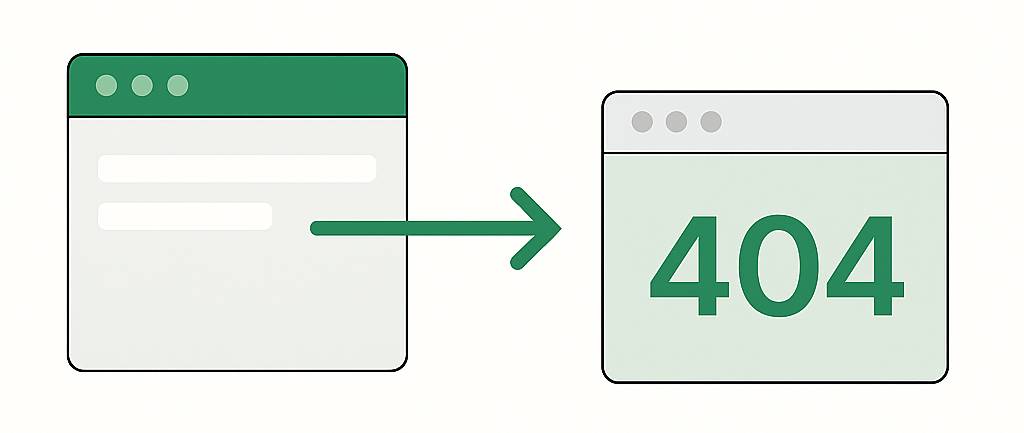
Start by identifying backlinks that lead to 404 pages, redirected URLs or outdated content. Once you have a list, map each old URL to the most relevant current page. The goal is to create a clean, direct redirect that preserves as much authority as possible. Avoid redirect chains, temporary redirects and redirects to pages that do not match the original intent.
If you have multiple outdated URLs pointing to similar content, consolidate them into a single strong page. This not only recovers link equity but also strengthens your internal architecture.
Redirect recovery is especially powerful after site migrations, rebrands or large content restructures. Many sites regain significant authority simply by cleaning up their redirect logic.
Outreach Recovery
Some backlinks decay because the linking page has been updated or the link has been removed. Outreach recovery focuses on restoring these links through direct communication with site owners, editors or content managers.
Begin by identifying high‑value links that have disappeared or weakened. Visit the linking page to understand what changed. Sometimes the link was removed during a rewrite. Sometimes the anchor text was altered. Sometimes the entire section was replaced.
When reaching out, keep the message simple and helpful. Editors respond best when you make their job easy. Offer updated information, a corrected reference or a fresh resource that improves their article. If the original link was removed unintentionally, most editors are happy to reinstate it.
Outreach recovery works best when you approach it as a value‑add rather than a request. You are helping them improve their content while restoring a link that benefits you.
Content Refresh and Relevance Recovery
Backlinks often decay because the content they point to has become outdated or less relevant. Refreshing your content can revive these links and encourage editors to maintain or reinstate them.
Start by reviewing the pages that have lost the most link equity. Look for outdated statistics, old screenshots, broken examples or content that no longer reflects current industry standards. Update the page with fresh insights, improved structure and clearer explanations.
Once the content is refreshed, revisit the linking pages. If the context has shifted, reach out to editors and let them know the resource has been updated. Many will reinstate the link or move it to a more prominent position.
Content refreshes also help you regain relevance in the eyes of search engines. When your content becomes stronger, the backlinks pointing to it naturally regain value.
“Freshness plays a role in how links are valued. Older links aren’t necessarily bad, but links from stale or unmaintained pages tend to lose influence.”
Source: Moz
Reclaiming Links From Brand Mentions
Sometimes your brand is mentioned without a link. These unlinked mentions are low‑friction opportunities to recover link equity. Tools such as Ahrefs Alerts or Google Alerts can help you track new mentions.
When you find an unlinked mention, reach out politely and ask if the editor would consider adding a link to your relevant page. Since they already referenced you, the request feels natural and is often accepted.
This approach is particularly effective for companies with strong brand visibility or those producing research, tools or data that others cite.
Recovering Links From Repurposed or Expired Domains
Some backlinks decay because the linking domain has expired or been repurposed. While you cannot recover links from expired domains directly, you can often reclaim the authority by identifying alternative pages that referenced the same content.
Search for other sites that quoted the same information, linked to similar resources or covered the same topic. These sites are strong candidates for outreach because they have already shown interest in the subject matter.
If the expired domain had multiple links pointing to you, consider creating a fresh resource that fills the gap left by the old site. This can attract new backlinks naturally.
Internal Link Reinforcement
Internal links do not replace lost backlinks, but they help stabilise the authority of pages affected by decay. When a page loses external authority, strengthening its internal links can prevent ranking drops.
Add internal links from relevant, high‑authority pages within your site. Use descriptive anchor text that reinforces the page’s topic. This helps search engines understand the importance of the page and compensates for some of the lost external equity.
Internal reinforcement is especially useful for pages that rely heavily on backlinks, such as landing pages, cornerstone guides or commercial content.
Prioritising Recovery Efforts
Not all backlinks are worth recovering. Focus on links that come from authoritative domains, links that support competitive keywords and links that point to high‑value pages.
A single reinstated link from a trusted site can have more impact than dozens of low‑value recoveries. Prioritisation ensures your efforts deliver meaningful results rather than chasing vanity metrics.
How To Prevent Backlink Decay
Prevention is easier than recovery. A few simple habits can protect your link equity.
Maintain your content
Update key pages regularly. Fresh content signals relevance and encourages editors to keep linking to you.
Keep URLs stable
Avoid unnecessary URL changes. If you must update a URL, use clean redirects and test them thoroughly.
Try LinkClerk for free
Weekly backlink audits without the manual work. Try a free trial today!
Strengthen internal linking
A strong internal linking structure helps search engines understand the importance of your pages. This supports backlink value and reduces decay.
Monitor domain expirations
If you own multiple domains or microsites, keep them active. Expired domains can cause large waves of link rot.
Create decay resistant link assets
Evergreen guides, research reports and tools tend to attract long lasting backlinks. These assets decay more slowly than news or trend based content.
Benchmarks and Lifespan Expectations
Backlinks are often treated as permanent assets, but the data shows they behave more like living signals that weaken, shift or disappear over time. Understanding typical decay rates and link lifespans helps you forecast how much link equity you will lose each year and how aggressively you need to build or recover links to maintain your authority.
Backlink Decay Is Normal and Measurable
Several large‑scale studies have analysed how backlinks age. While the numbers vary by industry and methodology, the trend is consistent: a meaningful percentage of backlinks decay every year.
Ahrefs conducted one of the most widely referenced studies on link rot and link loss. They found that 66.5% of links pointing to a sample of 2 million pages disappeared within nine years. Their research notes:
“The web is constantly changing. Pages get updated, moved, merged or deleted. As a result, links naturally rot over time.”
Source: Ahrefs
This is one of the clearest demonstrations that backlink decay is not an anomaly but a structural feature of the web.
Annual Decay Rates Across Industries
While long‑term studies show dramatic cumulative decay, the annual rate is more manageable. Most SEO practitioners and tool providers report that 8–15% of backlinks lose value each year, either through removal, redirect dilution or declining authority of the linking page.
A study by Moz on link stability found that links from news sites and fast‑moving industries decay faster, while links from evergreen educational or government sites tend to remain stable for much longer.
This aligns with real‑world experience: industries with rapid content turnover experience higher decay.
Lifespan Expectations for Different Link Types
Not all backlinks age the same way. Some are inherently more stable than others.
Editorial links from evergreen content
These tend to have the longest lifespan. Educational resources, government pages, university research, and evergreen guides often remain online for many years with minimal changes. These links decay slowly and often retain relevance.
Links from news articles
News content ages quickly. As new stories push older ones deeper into archives, their authority and relevance decline. These links often decay within one to three years.
Links from commercial blogs
These vary widely. Some blogs maintain their archives carefully, while others delete or merge older posts during content cleanups. Expect moderate decay.
Links from user‑generated content
Forum posts, comments and community platforms are highly unstable. Platforms shut down, threads get archived, and content is frequently removed. These links have the shortest lifespan.
Links from expired or repurposed domains
These links lose value instantly. Once a domain expires or changes ownership, search engines treat it as a new entity.
Decay Patterns Over Time
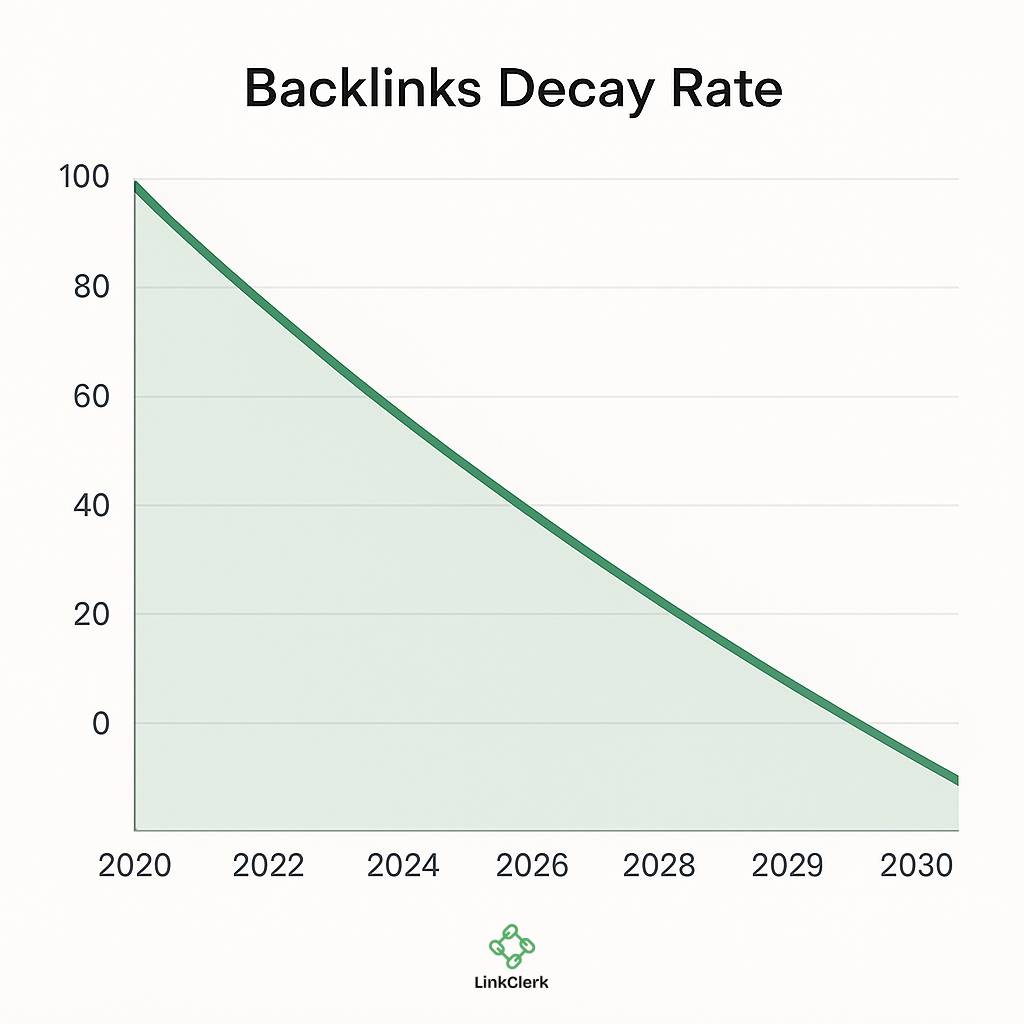
Backlink decay is not linear. It tends to follow a curve:
- The first year sees the highest volatility.
- Years two to four show moderate decay as content ages.
- After five years, the remaining links tend to be the most stable and authoritative.
This mirrors the findings from the Ahrefs study, which showed that the majority of link loss happens early, and the remaining links form a more durable “core”.
How Decay Affects Authority Forecasting
Understanding decay rates allows you to forecast how much link equity you will lose each year. For example:
- If your site earns 100 new high‑quality backlinks per year
- And your decay rate is 12%
- You are effectively losing 12 backlinks’ worth of authority annually
This means you need to build at least 12 new strong links each year just to maintain your current authority. Anything above that contributes to growth.
This forecasting model is rarely discussed in SEO content, yet it is one of the most practical ways to plan link building budgets and expectations.
Why These Benchmarks Matter
Benchmarks give you a realistic understanding of how your link profile behaves over time. They help you:
- anticipate natural authority loss
- set link building targets
- prioritise link reclamation
- identify industries with higher decay
- understand which link types are worth pursuing
Most importantly, they shift your mindset from “build links once” to “maintain link equity continuously”.
Backlink Decay Checklist
Here is a simple workflow you can use to stay ahead of backlink decay.
Weekly
- Check Google Search Console for sudden drops in impressions
- Monitor brand mentions for new link opportunities
Monthly
- Run a backlink audit
- Identify lost or weakened backlinks
- Prioritise high value recovery targets
Quarterly
- Refresh key content
- Review redirect maps
- Update internal linking
Annually
- Calculate your backlink decay rate
- Forecast link building needs for the next year
Conclusion
Backlink decay is not a dramatic event. It does not announce itself with sudden ranking crashes or obvious warnings. It works quietly in the background, slowly weakening the authority you have spent years building. This is why so many site owners overlook it. They focus on new content, new campaigns and new backlinks, while the equity they already earned slips away unnoticed.
Understanding backlink decay changes the way you think about SEO. It shifts your mindset from one‑off link building to ongoing link maintenance. It encourages you to treat backlinks as living assets that need care, monitoring and occasional repair.
When you measure decay properly, you begin to see patterns in how your link profile behaves. When you recover lost links, you restore authority far more efficiently than building new ones from scratch. When you prevent decay, you protect the long‑term strength of your site.
The most successful websites are not the ones that build the most links. They are the ones that preserve the authority they already have. They run regular backlink audits. They maintain clean URL structures. They refresh content before it becomes stale.
They monitor redirects, fix broken paths and reclaim links that slip through the cracks. They understand that link equity is a finite resource and treat it with the same care they give to their content and technical foundations.
Backlink decay will always be part of the web, there’s no avoiding it. Pages will be updated, domains will expire, editors will rewrite content and algorithms will evolve. You cannot stop these changes, but you can stay ahead of them. When you build a workflow that measures decay, recovers lost equity and prevents future loss, you create a link profile that remains strong even as the web shifts around you.
If you take one thing away from this guide, let it be this: backlink decay is not a problem to fix once. It is a process to manage continuously. The sooner you build decay monitoring into your SEO routine, the more stable your rankings become and the more authority you retain over time.